
On this page
- Is digital right for our cause or service?
- How can digital marketing help us further our cause and support our beneficiaries ?
- Who are our audiences online? Can digital marketing channels help us reach them?
- Do we have the resources to reach our goals?
- How can we measure and understand what marketing works best for us?
What areas does digital marketing cover?
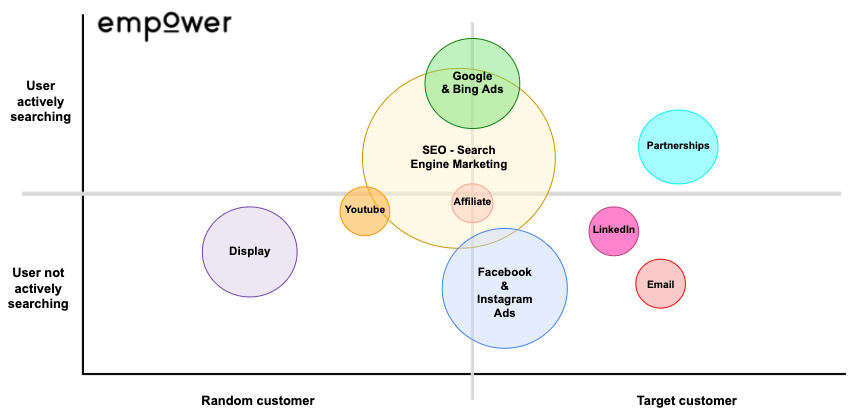
The first thing to understand about digital marketing is that the term covers a whole range of areas, with each area having its own discipline and best practice. Here’s an overview of the different areas of digital marketing, along with a few basic insights into how those channels can be best used:- Email Marketing – Sending emails to many people at once. You will have to ask people to subscribe through places like your website, in person events, or perhaps on social media. This is low cost to use, especially with a free service like Mailchimp. Email marketing also typically has the highest ROI (Return On Investment) for digital marketing as people give more attention to something in their inbox and will probably have a level of interest already to have given you their contact information.
- Social Media – Using social media platforms like Facebook, Instagram and Twitter to connect with other people and share your content. You may think social media is a low resource digital marketing channel, as there is no “cost” to use social media, but it can take up significant resources to build up a following or ‘likes’ through regular posts and engaging content.
- Google Ads – Ads that appear at the top of Google search results based on keywords associated with your organisation (you might not even realise they are ads!) Some people pay for these ads, but the Google Grants scheme offers $10,000 free advertising for charities per month. But there’s time investment needed to ensure it’s effectively utilised.
- Facebook Ads – Paying so that more people see your Facebook posts. Advertising on Facebook has proven effective for many charities and nonprofits, but it can be expensive. You’ll generally need an expert to help you get the best results. However, Facebook Ad for charities can start at a low cost and generate strong results.
- SEO – SEO, or Search Engine Optimisation, is all about tailoring your website and publishing content so that it is more likely to appear in search results. SEO can help drive traffic to your website without paying for ads. But SEO relies on you writing and publishing new content regularly to your website which can take a long time. You also need to do it in a way that enables search engines like Google to find your content.
- Video – Using online videos to promote or support your service. Although producing a slick video can be expensive, videos can be created at a low cost, such as when filmed on a smartphone. People are happy to watch a video that is authentic and honest, even if it isn’t professionally produced. Once created, videos can be repurposed for different channels, such as Youtube, your website, and across social media.
- Partnerships – Using your contacts to help you promote your service. This involves tapping into other people’s networks. You might ask colleagues at other organisations to share information about your service on their social media, email or other marketing channels. This just requires you to think about who (organisation or individual) in your network supports you or is working towards the same cause? Can your service or content be featured in their marketing activity?